


Rotomolded products are gradually coming into the public eye
I notice rotoMolding Mold and product options are becoming increasingly common everywhere. Their popularity continues to rise as consumers seek eco-friendly solutions. Innovative rotomolding mold and product designs now incorporate bio-based materials and clearer labeling. Take a look at the market growth:
| Year | Market Size (USD Billion) | CAGR (%) |
|---|---|---|
| 2024 | 1.90 | 6.1 |
| 2030 | 2.56 | 6.0 |
Key Takeaways
- Rotomolded products offer strong, seamless designs that last longer and resist damage better than many other plastic items, making them a smart and durable choice.
- These products are cost-effective for small batches and custom designs, with lower tooling costs and less waste, helping businesses save money and reduce environmental impact.
- Rotomolded products support sustainability by using recyclable and bio-based materials, creating less waste, and lasting longer, which helps protect the environment and meet growing eco-friendly demands.
Understanding Rotomolding Mold and Product

The Rotational Molding Process Explained
When I first learned about the rotational Molding Process, I realized how unique it is compared to other plastic forming methods. The process uses a rotomolding mold to shape the product. Here’s how it works, step by step:
- Pulverizing Resin: I start by turning polymer pellets or coarse powders into a fine powder. This step helps create a smooth surface and even wall thickness.
- Loading: Next, I load a precise amount of resin powder into a hollow mold. I always apply a mold release agent to make it easier to remove the finished product.
- Heating with Biaxial Rotation: I heat the mold in an oven while it rotates on two axes. The powder melts and coats the inside of the mold, forming the product’s walls.
- Cooling: I cool the mold slowly using air or water. This step solidifies the part and keeps its shape stable.
- Demolding: Once the part cools, I remove it from the mold. Sometimes, I use automated systems to avoid damaging the product.
- Secondary Finishing Processes: Finally, I might trim, paint, coat, or assemble the part. These finishing touches improve how the product looks and works.
I find this process fascinating because it allows me to create products with even thickness and strong corners. The rotomolding mold gives me the flexibility to design many shapes and sizes.
I also pay close attention to the materials I use. Here’s a table that shows some common materials and their properties:
| Material | Properties | Applications | Processing Benefits |
|---|---|---|---|
| Medium Density Polyethylene (MDPE) | Balanced rigidity and flexibility, crack resistance, impact resistance | Fuel tanks, shipping containers, household goods | Easy flow, suitable for large & complex shapes |
| High Density Polyethylene (HDPE) | High strength, impact resistance, chemical resistance, weatherability | Large storage tanks, outdoor furniture, agriculture products | Lightweight, no leaching |
| Low Density Polyethylene (LDPE) | Highly pliable, tough, good impact resistance, lower tensile strength | Squeeze bottles, toys, flexible hoses | Low melting point, high flow, easy to process |
| Cross Linked Polyethylene (XLPE) | Enhanced chemical resistance, thermal stability, withstands high temperatures | Chemical storage tanks, fuel tanks, piping systems | Optimal material performance |
| Ethylene Vinyl Acetate (EVA) | Excellent impact, stress-crack resistance, good flexibility, clarity, soft feel | Medical devices, footwear, flexible tubing | Easily blended, enhances specific properties |
| Polyvinylchloride (PVC) | Good chemical resistance, toughness, durability, flexible or rigid | Plumbing components, medical products, flexible hoses | Good heat stability, easy processability |
| Nylon | Thermal resistance, wear resistance, chemical stability | Automotive parts, industrial components, consumer goods | High strength, toughness, durability |
| Polycarbonate (PC) | High impact resistance, transparency, dimensional stability | Optical disks, eyewear lenses, safety helmets | Withstands high temperatures, flame-retardant |
| Polypropylene (PP) | High chemical resistance, fatigue resistance | Automotive components, consumer goods, food containers | Low density, resistant to solvents, acids |
I always choose the material based on the product’s purpose. For example, I use HDPE for outdoor furniture because it resists weather and impact.
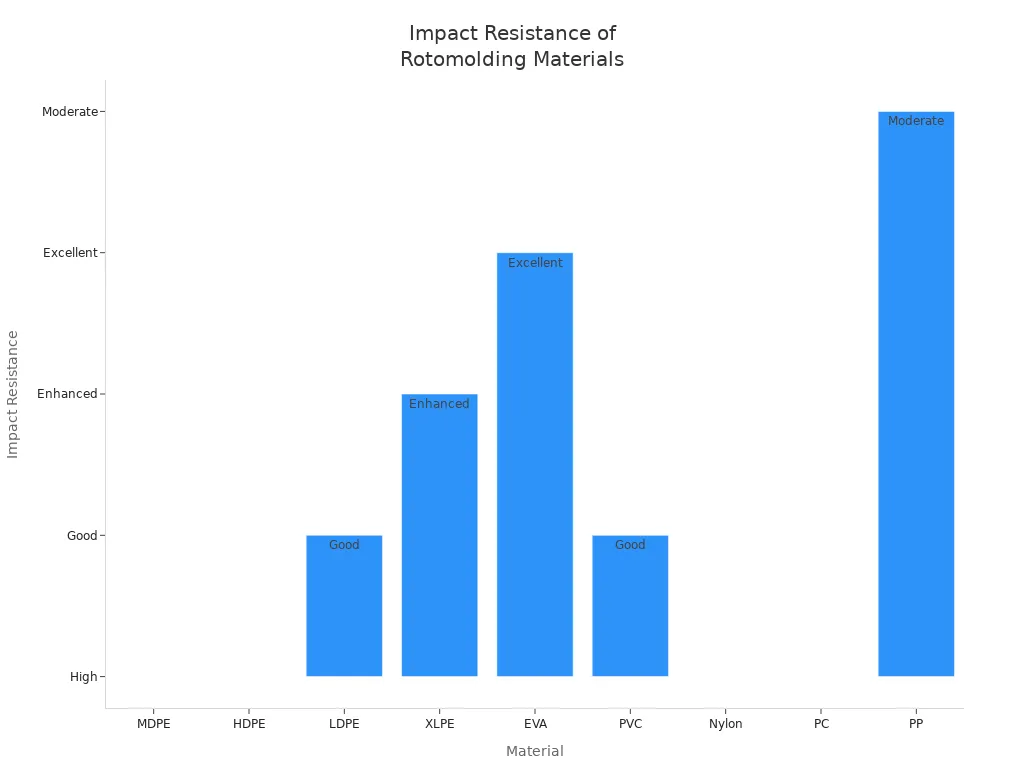
Here’s a chart that compares the impact resistance of some common rotoMolding Materials:
Key Advantages of Rotomolded Products
I have noticed several reasons why rotomolded products stand out. These advantages make them a smart choice for many industries and everyday uses.
- Rotomolded products have greater uniformity and strength than items made with other molding methods. I see this in their even wall thickness and strong corners.
- The process uses less tooling and takes less time to set up. I can produce small batches quickly, which is helpful for custom orders or urgent needs.
- I avoid stress points that often appear in other molding techniques. This means the products have fewer weak spots and last longer.
- I can create complex designs with fewer parts. This reduces assembly time and lowers costs.
- I like that I can add graphics directly into the product during molding. This makes logos and labels more durable.
- The process is eco-friendly. I produce very little waste, and I often use recyclable polyethylene.
When I compare rotomolded products to blow-molded or injection-molded items, I see clear differences in durability and lifespan.
Rotomolded products have seamless construction and uniform wall thickness. This gives them better structural integrity and strength. They resist impact, corrosion, UV rays, and chemicals. I find they last longer and need less maintenance, even in tough outdoor or industrial settings.
Blow-molded products often have seams or uneven thickness, which can weaken them. Rotomolded products, on the other hand, stay strong and reliable over time. Their durability means I do not have to replace them as often, which saves money and supports sustainability.
Why Rotomolded Products Are Becoming More Visible
Versatility Across Multiple Industries
I see rotomolded products in many different industries now. Their flexibility and strength make them a top choice for a wide range of uses. In the automotive sector, I notice that manufacturers use rotomolded fuel tanks and lightweight parts for electric vehicles. These parts help cars run better and last longer. In construction, I often find rotomolded insulation panels and safety equipment on job sites. Builders like these products because they are tough and easy to install.
Farmers rely on rotomolded water carts and tanks to move and store water. These products stand up to rough outdoor conditions and heavy use. Hospitals and clinics use rotomolded medical waste containers to keep their spaces safe and clean. I also see rotomolded kayaks, storage bins, and playground equipment in homes and parks. The packaging and material handling industries use rotomolded containers and pallets because they can carry heavy loads without breaking.
Here is a quick list of industries where I see the highest adoption rates for rotomolded products:
- Automotive: Fuel tanks, EV parts
- Construction: Insulation panels, safety gear
- Agriculture: Water carts, tanks, pipes
- Consumer goods: Kayaks, storage bins, toys
- Healthcare: Medical waste containers, equipment parts
- Packaging and material handling: Containers, pallets
- Industrial equipment: Durable machine parts
I find that the rotomolding mold and product options fit the needs of each industry. Their adaptability helps solve many different problems.
Cost-Effectiveness and Long-Lasting Performance
When I compare rotomolded products to those made with other methods, I notice big savings in both cost and maintenance. The process uses low-pressure molds, which means the tooling costs much less than other plastic forming methods. I can make complex shapes without spending a lot on special equipment. This makes rotomolding a smart choice for small and medium production runs.
Here is a table that shows how the costs compare:
| Cost Factor | Rotational Molding (Rotomolding) | Blow Molding |
|---|---|---|
| Tooling Cost | Significantly lower; about 1/6 to 1/10 of blow molding tooling cost | High; about 6-10 times higher than rotomolding tooling |
| Tooling Maintenance | Easier and less costly | More costly, frequent maintenance needed |
| Cycle Time | Longer cycle times | Shorter cycle times |
| Per-piece Cost | Higher at high volumes | Lower at high volumes |
| Design Flexibility | High; complex shapes possible | Limited; best for simple shapes |
I see that rotomolding works best for custom parts and smaller batches. The products last a long time, which saves money over the years. For example, rotomolded furniture has no seams or joints, so it does not break easily. I do not have to worry about rust, mold, or fading because the materials resist weather and chemicals. The smooth surfaces make cleaning easy, which is important in hospitals and schools.
I have learned that rotomolded products often outlast other options. Their strong, seamless design means fewer repairs and replacements. This makes them a smart investment for anyone who wants reliable, low-maintenance solutions.
Meeting the Demand for Sustainable Product Solutions
I care about the environment, so I look for products that help reduce waste and save resources. Rotomolded products meet these goals in several ways. The process uses mostly recyclable materials like polyethylene. When a product reaches the end of its life, I can recycle it instead of sending it to a landfill. The manufacturing process creates very little waste because I can reuse leftover materials.
Rotomolded products last a long time, so I do not need to replace them often. This reduces the amount of raw materials and energy used over time. Some rotomolded products even help buildings save energy. For example, seamless insulation blocks keep heat inside, which lowers heating and cooling costs.
Many companies now use biobased materials in their rotomolded products. If a product contains enough renewable ingredients, it can earn the USDA Certified Biobased Product label. This label shows that the product supports sustainability by using less petroleum and more renewable resources.
Here are some ways rotomolded products help the environment:
- They use recyclable materials and can be recycled at the end of their life.
- Their long lifespan means fewer replacements and less waste.
- The process creates little material waste.
- Some products improve energy efficiency in buildings.
- Biobased options support renewable resource use.
I believe that rotomolded products offer a strong answer to the growing demand for sustainable solutions. Their durability, recyclability, and eco-friendly options make them a smart choice for the future.
Trends in Rotomolding Mold and Product Applications
Outdoor and Recreational Product Innovations
I see more outdoor and recreational products using rotomolding technology every year. Kayaks and coolers stand out because they are lightweight, strong, and last a long time. I notice playground equipment and toys made this way can handle rough play and bad weather. These products do not crack or fade easily. I also find that new materials, like advanced polyethylene, help these items resist sun and chemical damage. Some companies now use recycled and biodegradable plastics, which makes these products better for the environment. I like how manufacturers use bright colors and smooth shapes to make playgrounds safer and more fun for kids.
Industrial and Commercial Rotomolded Solutions
In my experience, rotomolded solutions work well for many industries. Factories use large storage tanks for water and chemicals because they do not rust or leak. Farmers rely on feeders and bins that are easy to clean and move. I see hospitals use carts and trays that resist germs and chemicals. The seamless design means these products do not have weak spots, so they last longer. Companies can also make custom shapes, like bins with handles or tanks with special fittings, without extra parts. This saves time and money.
Tip: Rotomolded products often cost less to make in small batches, which helps businesses try new ideas quickly.
Everyday Consumer Product Examples
I use rotomolded items at home and see them everywhere. Storage bins, water tanks, and outdoor furniture are common. Many toys, like playhouses and slides, come from this process. Road barriers and traffic cones keep streets safe. Even some car parts, like cup holders and mud flaps, use rotomolding. These products stay strong, look good, and are easy to recycle. I notice that companies now offer more colors and shapes to match what people want. This makes daily life easier and more colorful.
Innovations Shaping the Future of Rotomolded Products
Advanced Materials and Eco-Friendly Rotomolding Mold Options
I see many new materials changing how I use the rotomolding mold and product process. Companies now use recycled plastics and bio-based resins to make products more sustainable. Some materials come from plants or other renewable resources, which helps lower the carbon footprint. I notice that new blends, like Revolve® EVOH and Revolve® PA RDN, offer better strength and keep gases like hydrogen safely inside tanks. These materials also help products last longer and use less energy during production.
- Recycled content with advanced stabilizers improves strength and makes processing easier.
- Biopolymer blends from renewable sources reduce the need for petroleum-based plastics.
- Multi-layered molding and composite materials create lighter, stronger, and greener products.
- Using recyclable materials and energy-saving methods helps cut down on waste.
I find that these changes make rotomolded products better for the environment and safer for people.
Automation and Smart Manufacturing in Rotomolding
I have watched automation transform the way I make rotomolded products. Smart machines now control temperature, mold speed, and rotation with great accuracy. Sensors and IoT devices track every step, so I can spot problems early and fix them fast. For example, infrared thermal mapping helps me avoid warping and keeps product sizes exact. Automation also lets me use less energy and finish each cycle faster. Some factories use robots to load and unload molds, which saves time and reduces mistakes.
- Real-time monitoring improves quality and cuts waste.
- Data analytics help me optimize each batch and save energy.
- 3D printing speeds up mold design and testing.
These tools make my work more efficient and help me deliver better products.
Personalization and Custom Product Design
I enjoy how easy it is to create custom rotomolded products. The process lets me design unique shapes, sizes, and features for each customer. I can add smart labels or special colors to make products stand out. Customization helps me meet strict rules and make sure each product fits its job perfectly. I also use eco-friendly materials and reusable designs to support sustainability.
- Advanced tech and data analytics improve custom product performance.
- Custom designs save money by reducing repairs and downtime.
- Personalization helps my products stand out in a busy market.
- I can meet special needs, like adding RFID labels or using bio-based plastics.
With these options, I give customers exactly what they want while keeping products strong and green.
The Future Outlook for Rotomolded Products
Expanding Market Opportunities for Rotomolding Mold and Product
I see strong growth ahead for rotomolded products in many regions. The market for rotomolded containers in North America is expected to reach $6.3 billion by 2034, growing at 3.4% each year. Globally, the market will grow even faster, with a 6.5% annual rate from 2026 to 2033. This growth comes from rising demand in construction, agriculture, automotive, and food processing. Here is a table that shows some of these forecasts:
| Market Segment | Region | CAGR (%) | Forecast Period | Projected Market Value (USD) |
|---|---|---|---|---|
| Rotomolded Containers Market | North America | 3.4 | 2024 - 2034 | 6.3 Billion by 2034 |
| Rotomolded Containers Market | Global | 6.5 | 2026 - 2033 | 2.10 Billion by 2033 |
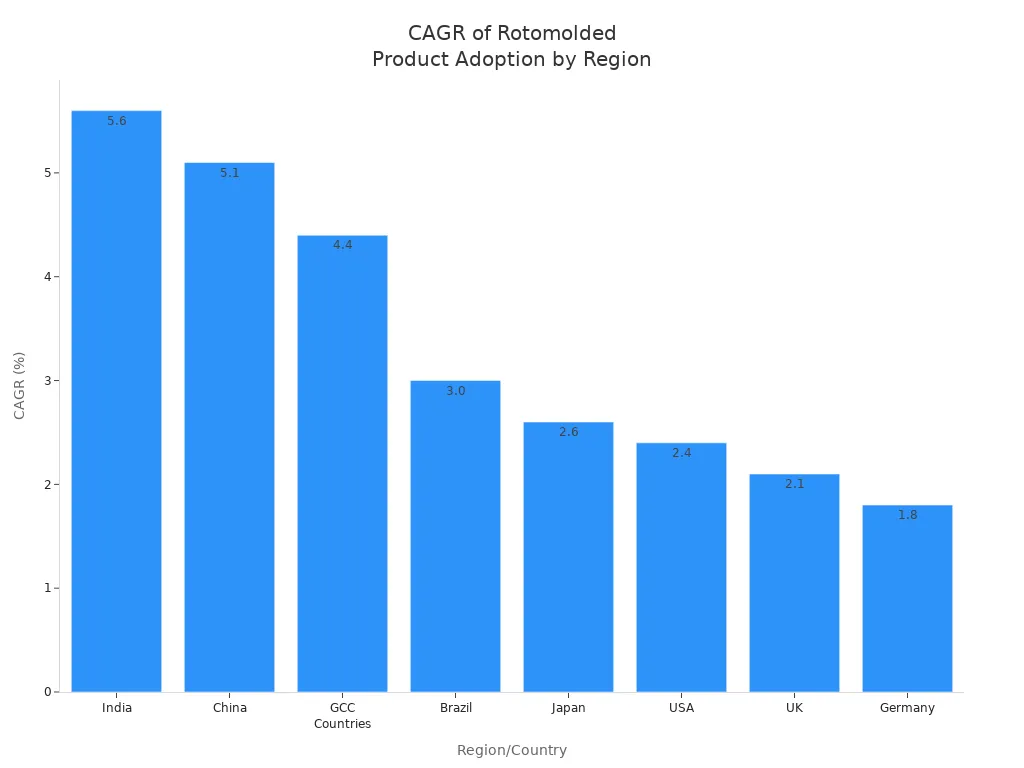
I notice that Asia Pacific, especially India and China, will see the fastest growth. India’s food processing and China’s chemical industries drive this trend.
Sustainability and the Circular Economy
I believe rotomolded products play a big role in building a circular economy. Most products use recyclable materials like polyethylene and polypropylene. Many companies now add post-consumer and post-industrial recycled plastics to reduce waste. These steps help keep plastics in use longer and cut down on new plastic production. I see more rules, like the EU’s Waste Framework Directive, pushing for better recycling and less downcycling. Industry groups and new sorting technology also help make recycling easier and more effective.
Note: Using recycled materials and designing for durability helps rotomolded products support a greener future.
Overcoming Challenges in Rotomolded Product Development
I face some challenges in making and using rotomolded products. High raw material costs and energy use can make production expensive. Sometimes, it is hard to find enough recycled materials. Smaller businesses struggle with high startup costs and strict rules. I also see a need for more skilled workers and better supply chains. To solve these problems, I use new materials, improve energy efficiency, and add more automation. I also focus on quality control and work with others in the industry to share ideas.
- I use recycled and biodegradable materials to lower environmental impact.
- I improve heating and insulation to save energy.
- I join recycling programs and use lean manufacturing to cut waste.
- I invest in automation and new testing methods to boost quality.
I see rotomolded products becoming more popular every year. Their strength, creative designs, and eco-friendly features impress me. I expect new technology and better materials will make these products even more useful. I look forward to seeing how they change daily life and many industries.
FAQ
What makes rotomolded products different from other plastic products?
I see rotomolded products have seamless construction. They last longer and resist impact better than many other plastic items.
Can I recycle rotomolded products when I finish using them?
Yes, I can recycle most rotomolded products. I check the material type and follow local recycling rules.
Are rotomolded products safe for food and water storage?
I use food-grade materials for rotomolded containers. These products keep food and water safe for long-term storage.